
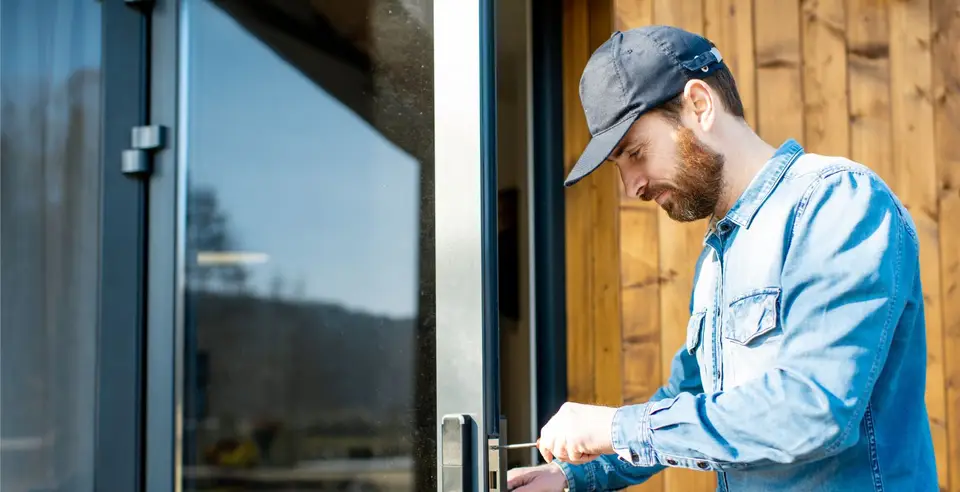
Door installation
Door Installation in Newcastle
A good door should close with a solid click, keep draughts out and lock without a struggle. Tom has been supplying and fitting doors in Newcastle for more than 16 years, and every installation is set up to do just that.
- Composite, uPVC and timber doors
- Most fits finished within a few hours
- Old door removed and opening made good
- Honest advice on the right material
Get a free quote
Tell us a little about the job and Tom will get back to you as soon as possible.
Why does the fitting matter so much?
Even a well-made door will cause problems if it’s fitted badly. If the frame is slightly out of square, the door drags, the lock gets stiff and gaps open up that let in wind and rain. Over time the hinges and locking parts wear out faster, and the door never feels quite right.
So Tom treats the fitting as the most important part of the job. The opening is measured carefully, the frame is set level and upright, and the door is adjusted before he leaves so it swings freely, seals evenly and locks smoothly.
Signs your door needs replacing
- You can feel a draught around the edges or under the door
- The lock is stiff, or you have to lift the handle hard to lock it
- The glass has misted up between the panes
- The door has dropped and catches on the frame or threshold
- The timber is swollen or rotten, or older uPVC has yellowed
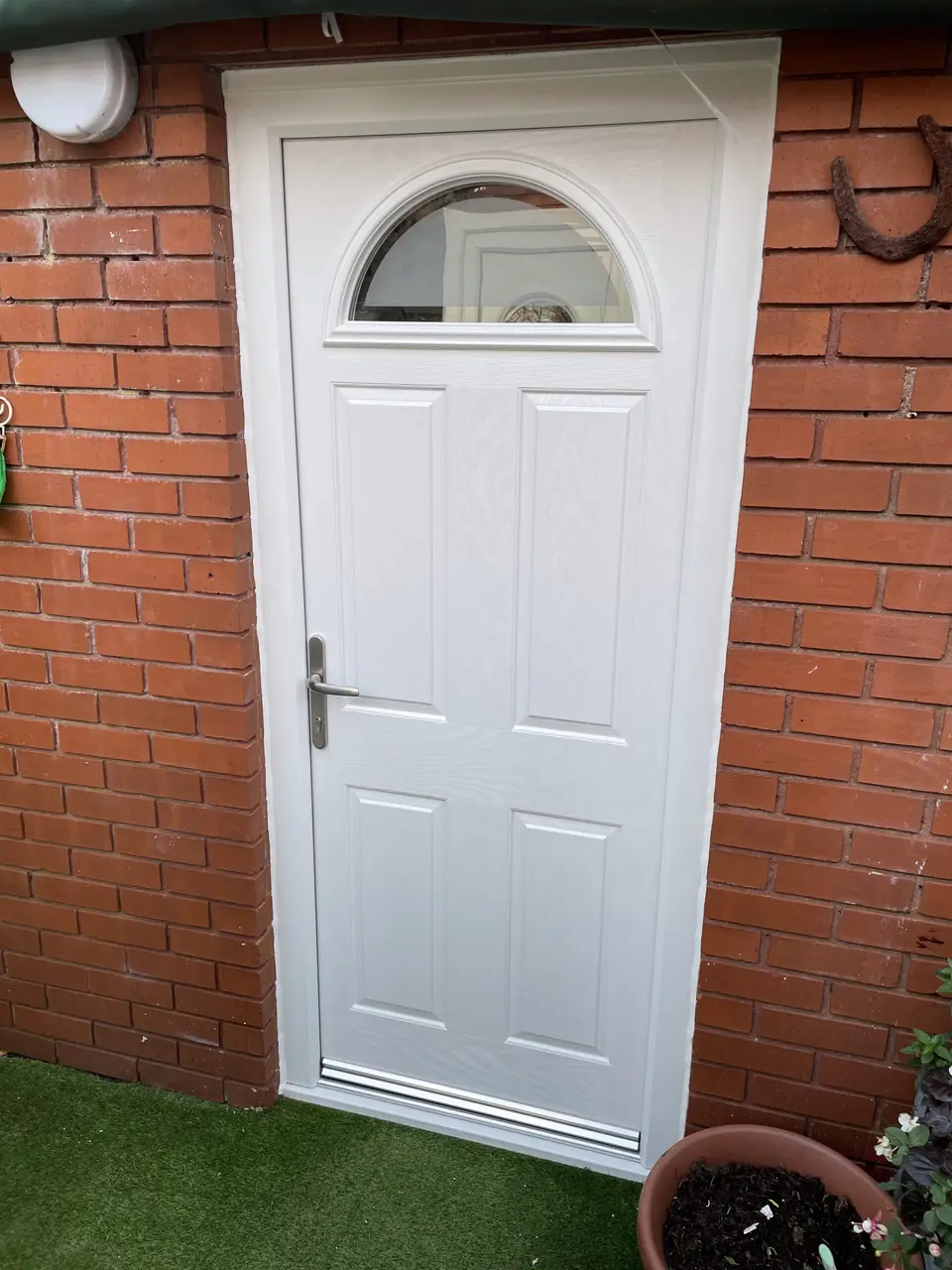
Compare materials
Should you choose composite, uPVC or timber?
There’s no single best material. This table shows how they generally compare, and Tom can talk through the specific options for your home.
| Composite | uPVC | Timber | |
|---|---|---|---|
| Look and feel | Realistic wood grain, solid and heavy | Smooth finish, with woodgrain foils available | Real wood with natural grain |
| Security | Thick, solid core that’s hard to force | Good, especially with modern locks | Strong when well made and looked after |
| Insulation | Excellent, thanks to the insulated core | Good | Good, as wood is a natural insulator |
| Upkeep | Very low: an occasional wipe | Very low: wash with soapy water | Repaint or re-stain every few years |
| Typical budget | Mid to upper | Most affordable | Mid to upper, depending on the timber |
| Best for | Front doors where security and looks matter | Back doors, side doors and matching uPVC windows | Period and character homes |
What to expect
How a new door is fitted
Measure and advise
Tom checks the opening, the brickwork around it and how you use the door day to day. He then recommends a material and style that suit your home.
Remove and prepare
The old door and frame are taken out carefully to limit damage. The opening is cleaned up and made ready for the new frame.
Fit, seal and adjust
The new frame is fixed level and square and sealed against the weather. The door is then adjusted until it opens, closes and locks smoothly.
Do front and back doors need to be different?
Often, yes. The two doors do different jobs, so think about them separately.
Front doors
Your front door is the main way in and the first thing people see. Security, insulation and appearance usually matter most here, which is why many people choose a composite door or a well-made timber door for the front of the house.
Back and side doors
Back doors tend to get heavy use and lead to the garden, so practical features count. Extra glass brings in light, and a uPVC door is a cost-effective way to match existing uPVC windows. If you’d like to open a room up to the garden, French doors or bi-folds are another option.
What to decide before choosing a door
A door should last for many years, so it pays to think beyond the colour.
Glass and privacy
Glass panels brighten a dark hallway, but the amount and type of glass affects privacy. Obscure or patterned glass is a popular middle ground for front doors, and you can see several examples on our projects page.
Locks
Most modern external doors use multi-point locks, which secure the door at several points along the frame. Ask about anti-snap cylinders too, which are designed to resist a common method of break-in.
Thresholds and access
If someone in your home uses a wheelchair or walking aid, or you want to avoid a trip hazard, mention it when you ask for a quote. Low thresholds are available on many door types.
Matching the house
The right door looks as if it belongs to the building. A bold modern colour can lift a newer house, while a panelled door usually suits a Victorian or Edwardian terrace better.
FAQs
Door installation questions
How long does it take to fit a new front door?
Most straightforward door replacements take a few hours. If the opening needs extra work, such as repairs to the brickwork or a change of size, Tom will explain this when he quotes so you know what to expect.
Will my home be left open while the door is changed?
No. The old door only comes out when the new one is ready to go in, and the aim is always to have your home secure again the same day.
Do you supply the door as well as fit it?
Yes. We offer supply and fit, so you have one point of contact from choosing the door to the final adjustment.
Can you fit a door I’ve bought elsewhere?
Send us the details. Whether we can fit it depends on the type, size and condition of the door, so it’s best talked through case by case.
How soon can you start?
Same-day installation is sometimes possible, depending on availability. Otherwise we’ll arrange a date that suits you.
Explore door materials
Get a price for your new door
Tell us which door you’re replacing and anything you already know about style or colour. Tom will reply with honest advice and a clear quote.