
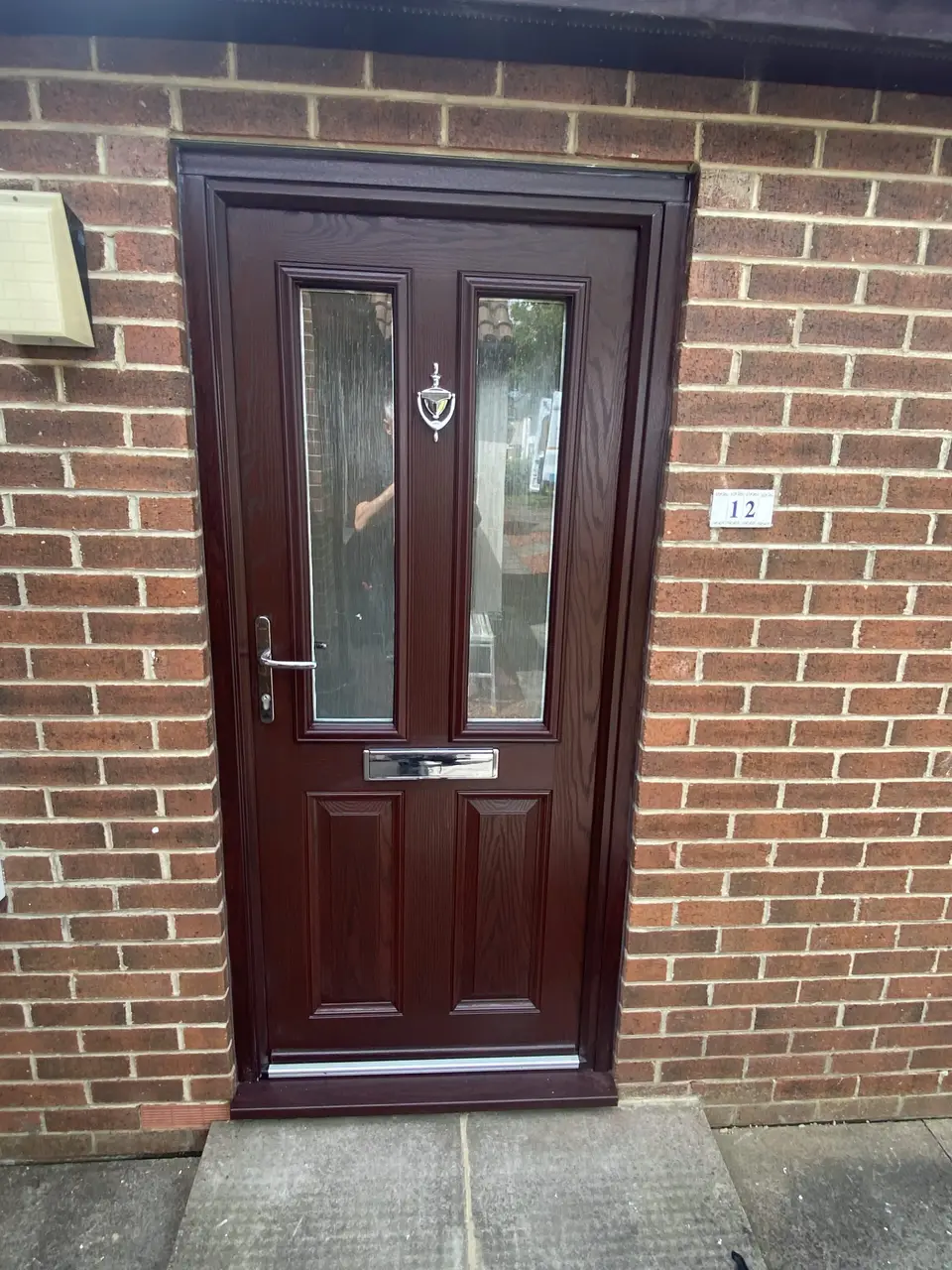
Composite doors
Composite Doors in Newcastle
A composite door looks like painted timber, feels solid when you close it and never needs repainting. Tom supplies and fits composite front and back doors for homes across Newcastle upon Tyne.
- Solid, insulated core
- Realistic wood-grain finish
- No painting needed
- Wide choice of colours and glass
Get a free quote
Tell us a little about the job and Tom will get back to you as soon as possible.
What is a composite door?
A composite door is made in layers rather than from one material. A hard-wearing outer skin is bonded to a solid insulating core. You get the look of a traditional painted wooden door, but it stands up far better to rain, wind and everyday knocks.
The door feels heavy and solid, helps keep the hallway warm and holds its colour without regular painting. That mix of strength and low upkeep is why composite has become such a common choice for front doors in the North East.
Is a composite door right for your home?
Composite doors suit most types of house, from new builds to older terraces. They’re a particularly good fit if:
- Your current front door is draughty or the hallway always feels cold
- Security is a priority and you want a solid door
- You like the look of wood but don’t want the upkeep
- You want a strong colour that stays looking fresh
Benefits
Why choose a composite door?
Strong security
A thick, solid core is much harder to force than a thin panel. With a multi-point lock, it gives your home a strong first line of defence.
A warmer hallway
The insulated core cuts heat loss through the door, so the entrance feels warmer in winter.
Very little upkeep
No painting, staining or sealing. Most composite doors only need a wipe now and then.
Made for the weather
Composite materials are designed not to swell, warp or rot the way wood can when it’s exposed to rain.
Timber-look finish
Wood-grain textures give a traditional look that suits older and newer homes.
Lots of choice
Colours, panel styles, glass and handles can be combined to suit your house.
Choosing the colour, glass and handles
Most of the decisions with a composite door are about the details. These are the ones people usually spend the most time on.
Colour
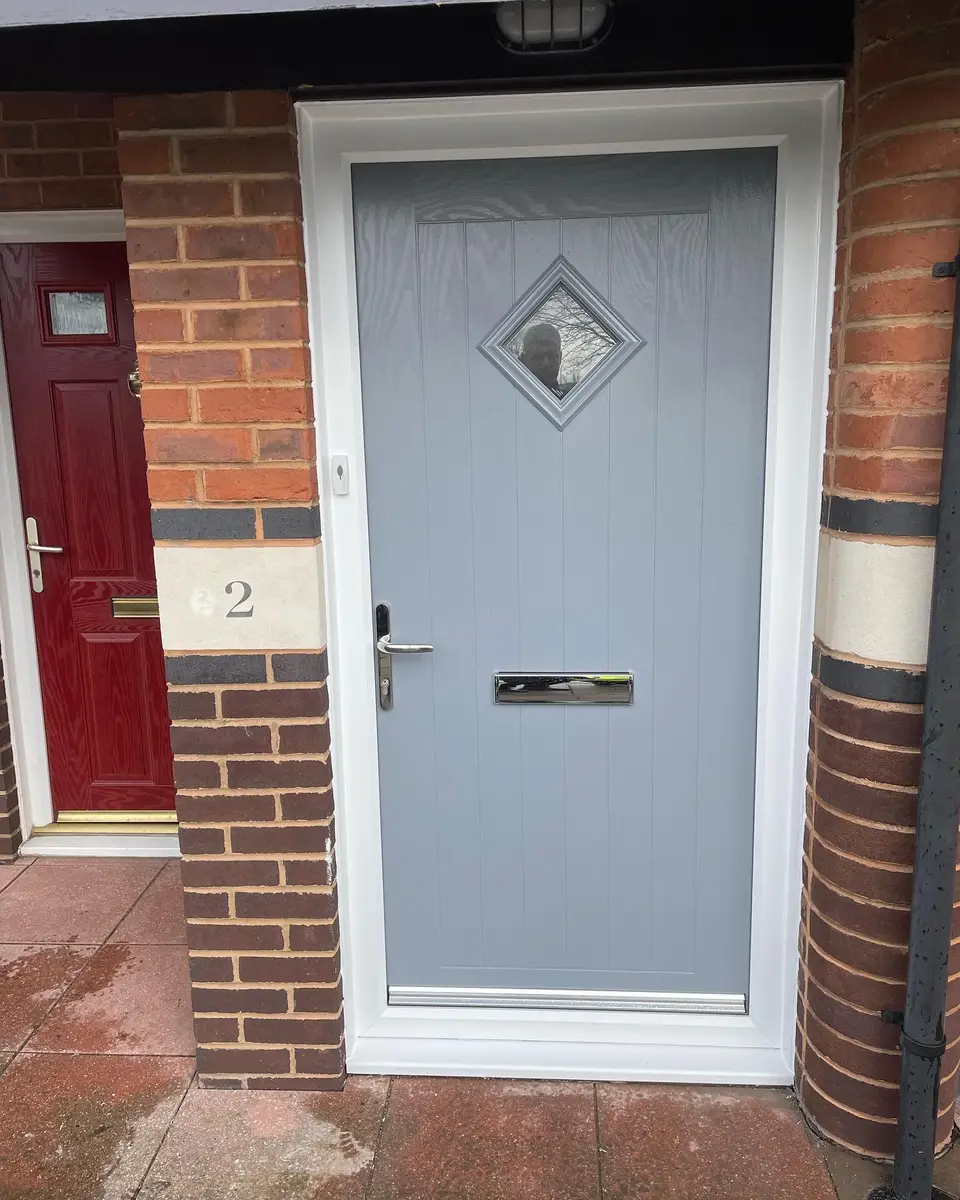
Black, anthracite grey, dark green and navy are long-standing favourites. Softer greys and muted shades have become popular on newer homes. If you’re unsure, look at your window frames, brickwork and roof together rather than picking the door colour on its own.
Glass
Patterned or obscure glass lets daylight into the hallway while keeping your privacy. A solid door gives a bolder look. Side panels and a glazed top light can be added where the opening allows, which helps if your hallway is dark.
Handles and fittings
Handles, knockers, letter plates and house numbers change the finished look more than you might expect. Chrome, black and gold-tone finishes each give quite a different feel.
What’s the difference between composite and uPVC?
A uPVC door usually has a lighter panel set into a uPVC frame. A composite door has a thicker, solid core, so it feels sturdier and insulates better, but it costs more. Both are low maintenance. For a front door, composite is often worth the extra. For a back door, uPVC can be the better value.
How do you look after a composite door?
Cleaning
Wash the door with warm water and a little washing-up liquid on a soft cloth. Avoid scouring pads and strong solvents, which can mark the surface.
Hinges, locks and seals
Put a little light oil on the hinges and locking points once or twice a year. Wipe the rubber seals now and then so they stay soft and seal properly.
Do composite doors fade in the sun?
Good-quality composite doors are made to resist fading, and the colour runs through the skin rather than sitting on top as paint. Over many years, a very dark door that faces full sun all day may lighten slightly. If your front door gets strong sun, mention it when you ask for a quote so you can choose a colour that suits it.
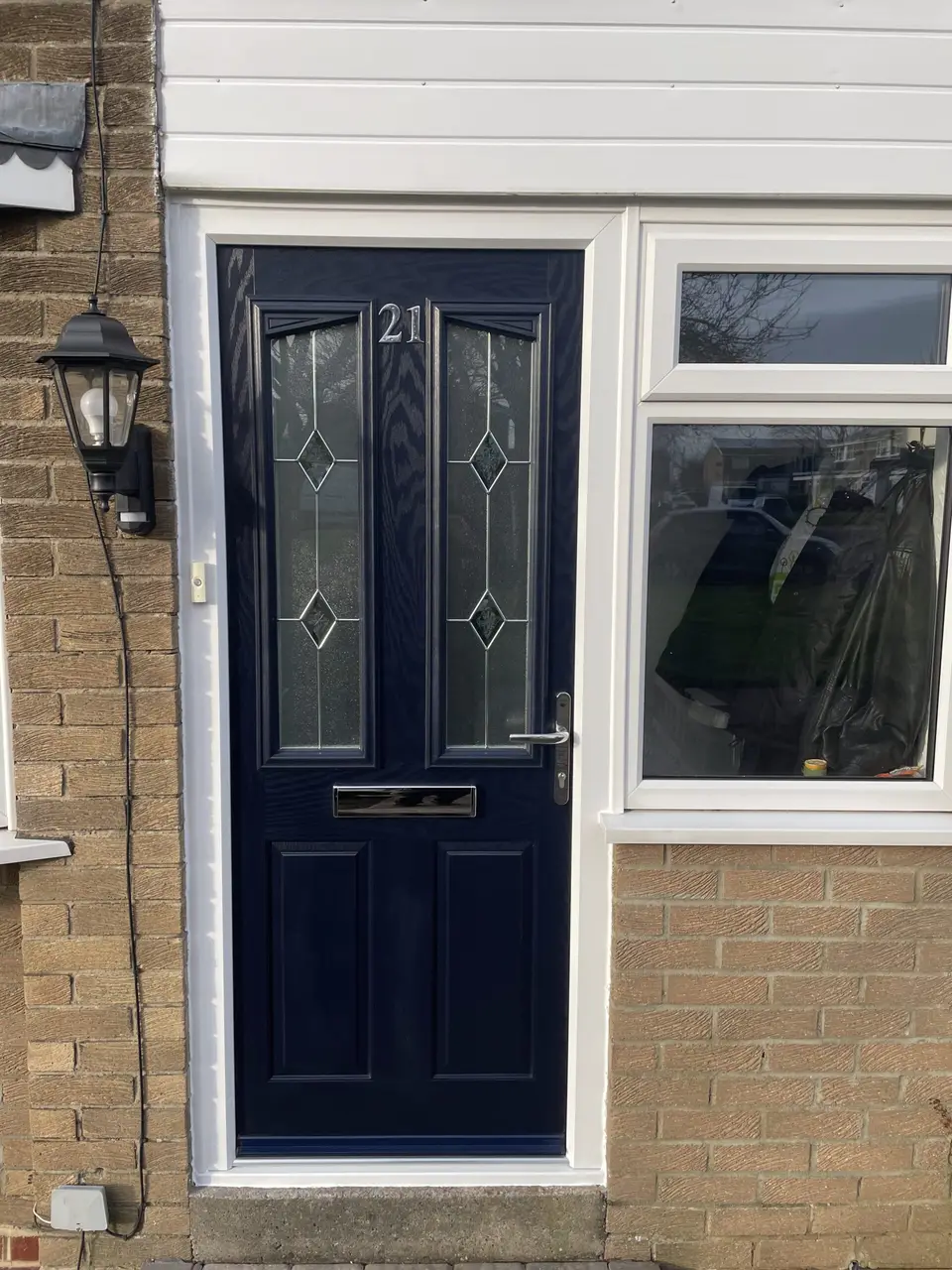
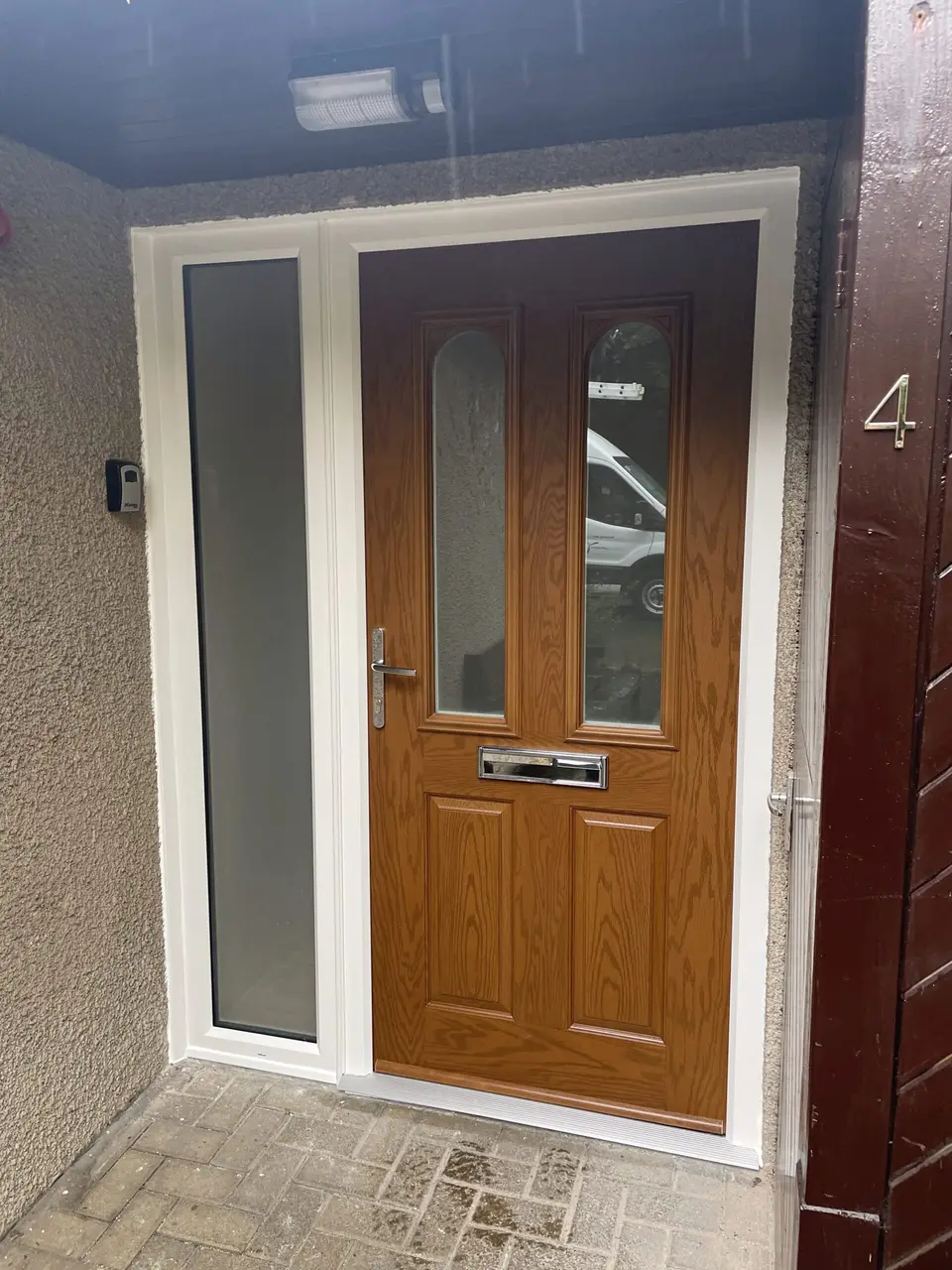
Recent installations
Composite doors we have fitted
FAQs
Composite door questions
What is a composite door made of?
A composite door combines several materials. There’s usually a tough outer skin, often glass-reinforced plastic (GRP) with a wood-grain texture, over a solid insulating core inside a reinforced frame. The exact build varies between manufacturers.
Are composite doors more secure than uPVC doors?
Composite doors are generally thicker and more solid than standard uPVC panel doors, which makes them harder to force. Security also depends on the lock and cylinder, so look at the whole door rather than the slab alone.
Do composite doors need painting?
No. The colour is part of the door skin, so there’s no sanding or repainting. A wipe with a soft cloth and mild soapy water keeps it looking good.
Can I have a different colour on the inside?
Many composite door ranges offer a different colour inside and out. This is handy if you want a bold colour facing the street and white or a neutral shade in the hallway.
How long does it take to fit a composite door?
Most straightforward composite door installations take a few hours, and your home is secure again the same day.
Related services
Price up your composite door
Let us know which door you’re replacing and any colours or styles you like. Tom will reply with honest advice and a clear quote.